Services · Dental Health
Preventive & General Dental Care
Most dental problems are cheap and painless to fix when they're caught small, and expensive and painful once they're not. This is the everyday care that keeps it that way: fillings, bonding, sealants, gum care, and the digital X-rays that let us see trouble before you feel it.
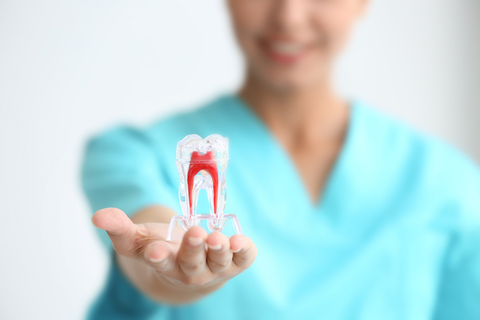
Catch a cavity early, and it's a simple, painless visit
A filling removes the decayed part of a tooth and replaces it with new material, which is why it's called a "filling." We use bonded, tooth-colored composite resin rather than the old silver amalgam, so a treated tooth blends in instead of standing out. Caught while it's still small, a cavity is quick and painless to treat. Left alone, the same cavity can spread into the tooth's nerve and turn into pain, infection, and a root canal or extraction you didn't need to have.
We use bonded, tooth-colored composite resin for most fillings, not silver amalgam.
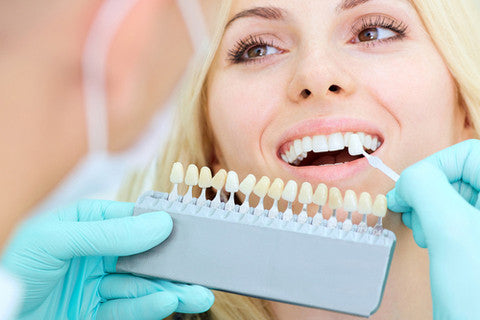
Fix a chip in one visit, or seal a cavity out before it starts
Bonding repairs a chipped or decayed tooth, closes a small gap, or straightens the look of a tooth by adhering tooth-colored composite resin to the front surface. We roughen the tooth, apply a gel that micro-etches the surface, then a primer so the material grips, before shaping and hardening it under a curing light and polishing it to a natural shine. Sealants do a different job: some back teeth have grooves and pits so narrow a toothbrush bristle can't get into them. Left alone, plaque collects there and turns into a cavity. A sealant is a thin coating brushed over those grooves so you can actually brush the plaque away and keep the tooth healthy.
Bonding is shaped and cured with a curing light, then polished for a natural finish; sealants are usually done for children and teens but help patients of any age.
Gum disease is the top reason adults lose teeth, and it's treatable early
Your gums, ligaments, and the bone around your teeth (together called the periodontium) are the foundation your teeth sit in. When that foundation isn't healthy, it threatens your teeth the same way a bad foundation threatens a house. Watch for gums that are red or bleed easily, breath that won't go away, gums pulling back from a tooth, a tooth that feels loose, or a bite that feels different than it used to. Any one of those can mean something's wrong, and with the right care it's often reversible. Treatment is usually a deep cleaning, also called root planing, done under local anesthetic and sometimes paired with a local antibiotic. Caught early, that's often all it takes. Left untreated, gum disease can progress to the point where surgery or extraction is the only option, which is why we'd rather see you at the first sign of a problem.
Non-surgical treatment is a deep cleaning (root planing) under local anesthetic, sometimes with a local antibiotic agent.
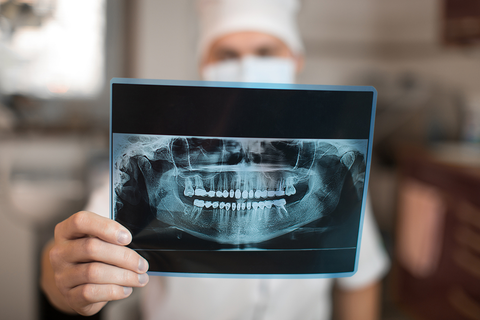
See what's happening below the gumline, with far less radiation
An X-ray passes a focused beam through bone and tissue to produce the familiar black-and-white image dentists use to diagnose problems. It's not optional detail: without an X-ray of the full tooth, root, and surrounding bone, there's no real way to catch an infection or a problem that's developing out of sight. We use digital radiography, which puts the image on a screen instantly instead of waiting on film, and lets us enhance and zoom the image for a clearer look at anything that concerns us.
Our digital X-rays use 50 to 70 percent less radiation than conventional film X-rays.
Questions patients ask
A few things patients want to know
What about silver fillings versus white fillings?
Silver (amalgam) fillings have never been shown to pose a health risk, but most patients today ask for tooth-colored composite instead, and it's what we prefer too. Composite bonds directly to the tooth, which helps strengthen a tooth that decay has weakened, tends to be less sensitive to hot and cold, and looks like a natural tooth instead of a metal spot. White fillings aren't right for every situation. If a tooth is badly broken down, a crown usually gives a better, longer-lasting result.
Which type of toothbrush should I use?
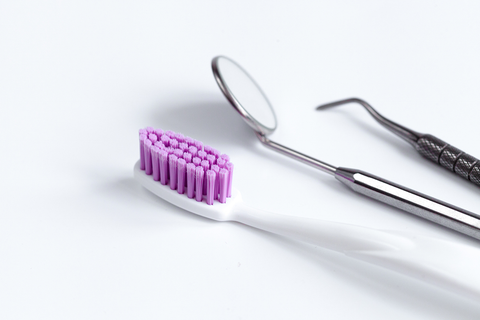
The brand matters less than the bristle and the head size. A soft brush with a small head is best. Medium and hard bristles tend to irritate gums and contribute to gum recession over time, and a small head lets you get around each tooth fully without hurting your gums. There's no need to scrub hard, just brush at least twice a day and keep up with cleanings twice a year.
How often should I floss?
Once a day. Flossing clears the spaces between teeth that a toothbrush can't reach, which is exactly where cavities like to start, and it keeps your gums healthier too.
Is one toothpaste better than another?
Generally, no, as long as it contains fluoride, which lowers your risk of decay. Beyond that, use whichever one you'll actually enjoy using, since that's the toothpaste you'll stick with.
Ready when you are
Keep small problems small
A filling, a sealant, or a deep cleaning today is almost always simpler and cheaper than what the same problem turns into a year from now. Call us or book online, and we'll get you on the schedule.
Need more than routine care? See Advanced Procedures for root canals, crowns, and bridges, or Dentures in a Day for same-day, in-house-lab dentures.